


Partnering With Our Customers for a Vibrant Saint Paul

luke gaAlswyk
PRESIDENT & CEO
In 2025, District Energy St. Paul witnessed numerous changes and innovations emerging in our industry.
What remains the same is our commitment to you, our customers, and our gratitude for the part you play in maintaining your system connection and all of the unique ways that you contribute to the vitality of the Saint Paul community.
This year, we want to highlight the power of community, from local artists and volunteering opportunities to international conference recognition and the value that innovative technology solutions can bring to the vibrant, historic city of Saint Paul.
We also share updates and investments in St. Paul Cogeneration to keep our system running reliably, along with exciting work on electrification initiatives, including starting construction on a new chilled water facility and a promising feasibility study for a new geothermal system for residents of Mount Airy Homes. Our 2025 stories are a small sample of the work that District Energy is moving forward, and my hope is that they speak to the value of teamwork and our continued commitment to the customers and community we serve.
As we continue to bolster Saint Paul’s position as an energy leader, we remain in pursuit of low-carbon and no-carbon energy solutions with cost-effectiveness as a guiding principle. In 2025, we continued to pursue strategic solutions for long-term system transformation. Clean Heat St. Paul, District Energy’s collaboration with the City of Saint Paul, Metropolitan Council, and Xcel Energy, continues to advance through the planning stages as we engage with stakeholders for a potential future primary thermal energy source. Our hope is that, once a reality, Clean Heat St. Paul could generate global interest and be a model for other cities to replicate.
This year, artificial intelligence and data centers have dominated conversations in the energy space as well as in our everyday lives. We are actively evaluating small scale data center heat recovery opportunities as downtown commercial properties explore potential conversions. As I shared in a recent co-authored op-ed in MinnPost with Clean Energy Economy MN, I believe Minnesota is in a prime position to use this recovered heat to lower emissions and costs. This presents an exciting opportunity and use case for district energy technology. While AI is evolving rapidly, we want you to know that we are monitoring this market for future opportunities that are judicious and thoughtful as it pertains to Saint Paul specifically, and the environment more broadly.
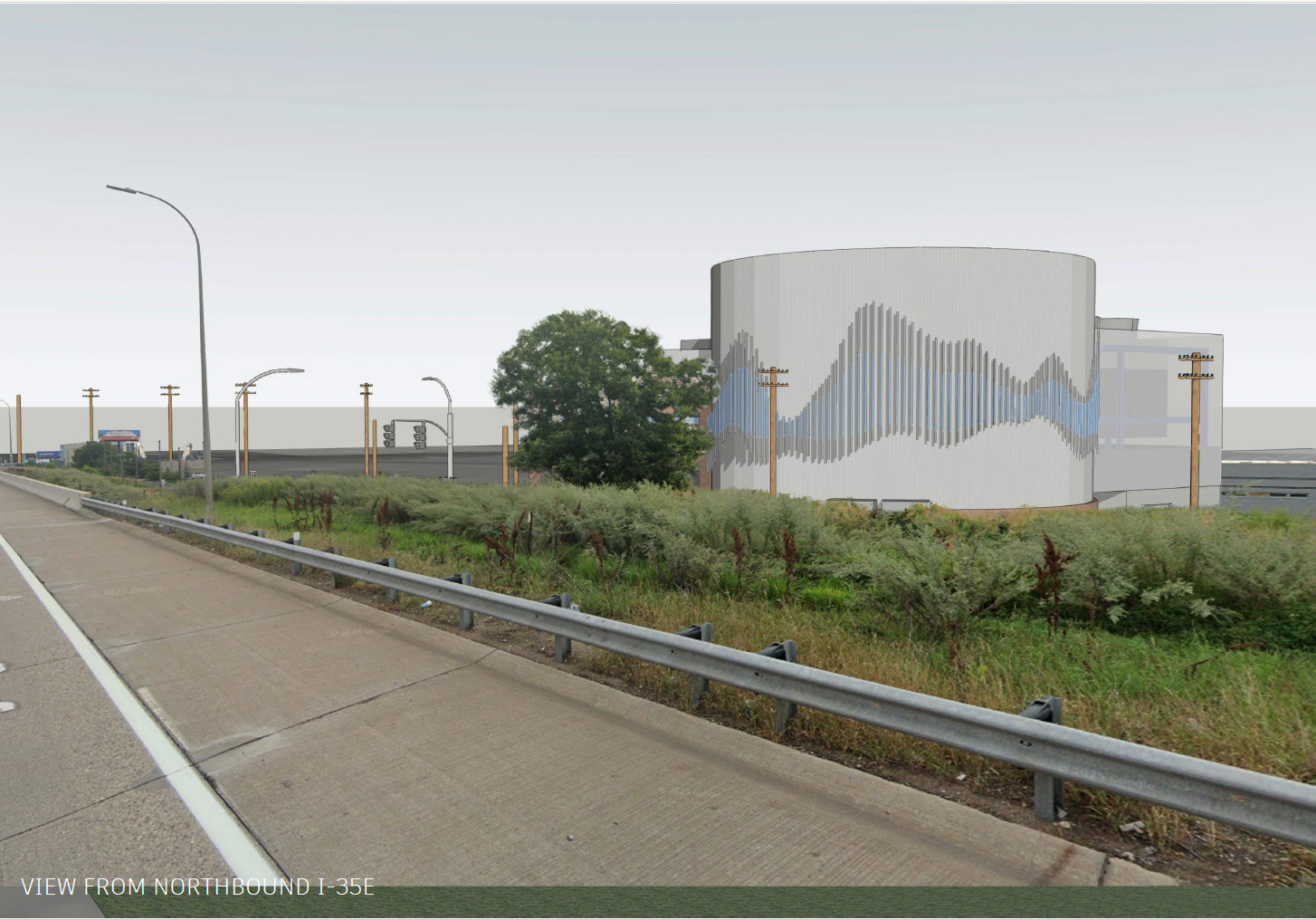
While we monitor these trends and think about the future of the system, our primary goals remain maintaining our system and providing excellent service to our customers. This year, we made significant investments in St. Paul Cogeneration, including a major overhaul of our steam turbine, described in detail in the pages that follow. I am also excited to share that District Energy recently broke ground on a new chilled water facility to serve our customer base, the forthcoming Capital City Thermal Plant. This new chiller plant will expand our capacity and allow us to offer our cooling services to new customers while maintaining our quality of service.
Our 2025 stories are a small sample of the work that District Energy is moving forward, and my hope is that it speaks to the value of teamwork and our continued commitment to the customers and community we serve.
luke gaAlswyk
President & CEO at District Energy St. Paul


As former Mayor Melvin Carter concludes his seven-year service to the City of Saint Paul, we are grateful for his leadership and are thankful for the impact he has had on our work and community. We look forward to working with our new Mayor Kaohly Her to continue championing Saint Paul and the good work occurring here.
In the stories that follow, our hope is that you can feel our deep appreciation for our customers and community through the stories we have chosen to share. Whether it be through investments in our equipment with the turbine bypass, a celebration of local artistry, or contributing to the building of a robust tree canopy at The Heights, the work that we do at District Energy always centers on our community and customers. Progress and innovation are a team effort, and we look forward to continuing to collaborate alongside you in 2026 and beyond.
TURBINE Overhaul SIGNALS SIGNIFICANT INVESTMENT
FOR CUSTOMERS OF ST. PAUL COGENERATION
In 2024, District Energy extended our power purchase agreement with Xcel Energy through May 2028, allowing for the continued production of biomass-fueled, renewable heating and hot water services for District Energy customers. This agreement is key to ensuring that District Energy has the tools it needs to continue providing customers with the same quality of service, reliability, and efficient energy that District Energy customers expect. This year, significant investments were made to extend the life of the turbine to allow for continued electrical power generation, and steam extraction for delivering heat to the District Energy hot water system.
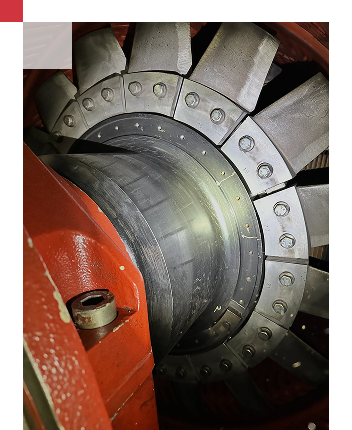
At the St. Paul Cogeneration facility, biomass is burned to create high-pressure steam. The steam then passes through the turbine, generating up to 25 megawatts of electricity. As with any piece of equipment, periodic maintenance is essential to keep things functioning well and extend the life of the machine. This summer, District Energy performed a major overhaul on the turbine, with an eye towards extended functionality so we can continue a high level of service for our customers and limit unplanned and often costly maintenance needs down the line.
Chris Peterson, Director of Regional Operations, and his team at District Energy oversaw a disassembly, thorough inspection, and reassembly of the turbine to inspect each component, including the blading. This is a very expansive and complex maintenance endeavor that happens every 5-8 years. “All components of the turbine and its support systems were examined, cleaned, and in some cases rebuilt or replaced.”
While the turbine was found to be in good condition overall, the team spent the time necessary to check that each part met standards and specifications. Due to wear on the bearings in the turbine gear box, custom bearings needed to be manufactured. Once reassembled, work began to assure proper balance and alignment post-outage, working with highly skilled technicians.
Typically, once steam has driven the turbine and generated electricity, most power plants will send the steam back through a condenser, converting it into liquid form and sending it to the boiler to repeat the process. At District Energy, however, we extract the still-useful energy remaining in the steam after generating electricity, using it to create carbon-neutral heating for our customers.
Any time you perform preventive maintenance, as you should, it avoids corrective maintenance. Doing this work preemptively saves a lot of downtime as well as overall cost.
CHRIS PETERSON
Director of Regional Operations
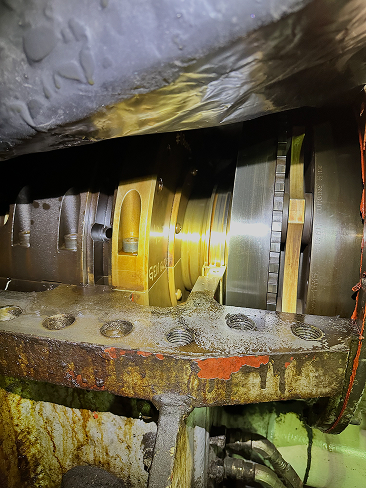
Gear box internals
In 2026, a turbine bypass will be installed, allowing heat to be sent directly to the heat exchangers, instead of collecting waste heat off of the turbine.
This means that heating can be produced even when the turbine is unavailable, adding meaningful flexibility and resiliency to our system.
Peterson sees many major benefits as a result of this overhaul project. “Any time you perform preventive maintenance, as you should, it avoids corrective maintenance. Doing this work preemptively saves a lot of downtime as well as overall cost.”
The heat created using biomass is a carbon-neutral energy source. Working within a cogeneration system also allows for fuel flexibility. Natural gas is burned on the District Energy side while biomass burns on the cogeneration side. In a market where fuel prices can easily fluctuate, having this fuel mix allows District Energy to shift to one or the other, increasing reliability while keeping costs lower for our customers.
Peterson also acknowledges that the Twin Cities suffer from a major problem of urban wood waste, primarily due to damage caused by emerald ash borer infestation.


“We have hundreds of thousands of tons of wood waste with nowhere to go,” he says. “Instead of letting that wood waste decompose and release carbon into the atmosphere, we can use it as a fuel for energy production.”
This large-scale overhaul process is yet another way to demonstrate District Energy’s commitment to our customers. As customers look to us for continued heating and cooling through the extended power purchase agreement, they can be confident that District Energy maximizes the energy value from our steam and the biomass used to create it, delivering the reliable service they need.

IDEA CONFERENCE
ATTENDEES TOUR INSIDE DISTRICT ENERGY AND THE UNIVERSITY OF MINNESOTA TWIN CITIES PLANT
This past June, the International District Energy Association’s annual conference was held in Minneapolis. The conference provided ample opportunities to network with our industry peers as well as present on some key learnings from the work being done by District Energy and Ever-Green Energy.
As part of the conference, attendees were invited to tour District Energy’s plant and the Main Energy Plant at the University of Minnesota Twin Cities, operated by Ever-Green.


Over sixty participants joined us from around North America and around the globe, from Canada, the United Kingdom, Japan, Mongolia, and more. We were able to shine a light on Saint Paul’s innovation, long-standing vision, and commitment to serving customers downtown.
Our teams were excited to invite attendees into our plants and share some of the solutions that we have been able to integrate including biomass infrastructure, thermal storage, and solar thermal. The tours offered an exciting opportunity to showcase the work happening at two of our operations in Saint Paul and Minneapolis.
MOUNT AIRY HOMES
geothermal heating potential
Just outside downtown Saint Paul sits 301 townhomes and a community center that make up Mount Airy Homes. Owned by the Saint Paul Public Housing Authority, Mount Airy Homes has been a District Energy hot water customer since 1985.
District Energy continues to evaluate new opportunities that support energy conservation, electrified heating, reliable service, environmental stewardship, and long-term price stability. To that end, the City of Saint Paul has been awarded a geothermal planning grant from the State of Minnesota that will fund a feasibility and pre-design study for a geothermal system at Mount Airy Homes. District Energy St. Paul will lead the study and work closely with the City of Saint Paul throughout the process, submitting monthly findings. A report detailing recommendations and next steps will be the final product at this stage.
District Energy provides customers with reliable, efficient, and cost competitive solutions. We are excited to explore this new heating supply option for the Mount Airy Homes community. The residents of Mount Airy Homes have been customers on the system since shortly after our founding, and we are eager to complete this study and continue to serve the residents of this community for many years to come.
STEVE RAMBeCK
Vice President of Business Development and Commercial Strategy
By proactively seeking out solutions that allow for heating systems to be supplied by renewable energy resources, District Energy is thinking towards the future while keeping our customers top-of-mind; researching new, cost-effective ways to provide the service our customers require.

A LOCAL ARTIST’S SPECIAL CONNECTION
TO sAINT paul, district energy, and Snoopy

Outside District Energy’s Hans O. Nyman Energy Center is a statue of two Saint Paul icons: Snoopy and Woodstock sit atop a doghouse painted with the tagline ‘Red hot, cool, green.’ The doghouse statue is the final in a series from the 2000s honoring Peanuts cartoonist and Saint Paul native, Charles M. Schulz.
Marla Gamble, the artist behind District Energy’s statue, has a special connection to our work as a lifetime Saint Paul artist and resident of the Lowertown Lofts Artist Cooperative. A custom jeweler working in gold and gemstones and an oil and watercolor painter, Marla has held studio space in Lowertown Lofts since it opened. A 1903 warehouse situated next door to James. J. Hill’s executive offices, Lowertown Lofts is a historic preservation site and was the first building in Lowertown to connect to District Energy in the summer of 1985.
What we liked is that Lowertown Lofts is a cooperative and District Energy is a cooperative. Both organizations share a common goal in helping their communities thrive and grow.
MARLA GAMBLE
Saint Paul artist and resident of Lowertown Lofts Artist Cooperative
“They built a little substation outside that goes into our building to be able to connect,” recalls Marla. “What we liked is that Lowertown Lofts is a cooperative and District Energy is a cooperative. Both organizations share a common goal in helping their communities thrive and grow.”
Eventually, Marla and her husband assumed the roles of property and site manager of Lowertown Lofts, making their longstanding relationship with District Energy even stronger.
“For thirty-seven years, I got to know the system and all the people behind it,” she shares. “One of the big benefits is that District Energy does the projections and keeps us informed. To have energy cost projections is very helpful in our budgeting. [The District Energy team] have a relationship with each of the buildings. They know what’s going on, and we can always contact them and get a response.”
To this day, the District Energy Snoopy continues to turns heads, with people passing by the plant who can’t resist stopping for a selfie with the beloved landmark.
Refreshed in the summer of 2025, the Snoopy statue’s once faded colors now shine again in a vibrant, cartoon-bright palette reminiscent of the classic comics themselves. Both sides of the statue feature Marla’s signature: skylines of Saint Paul.

“I originally painted it in the year of the Grand Excursion, which is when they brought all these big boats up to the Mississippi River, so there is a boat that comes out of the doghouse and looks like it’s floating on the river. District Energy wanted the stripes to say ‘Red hot, cool, green’, and I added a tree sprig in Woodstock’s hand as a tribute to biomass.”
While painting the refresh, Marla requested “a nice, warm place with electricity and light” to work, which turned out to be the District Energy plant on 10th Street. “Everybody kept track of my progress,” she notes of the three-week process working in the plant. “They could see things were happening, and I got a ‘Look, you’re almost done!’ every once in a while.”
Reflecting on her work as an artist and fifty years spent in Saint Paul, Marla says it’s simple: “The art community is a major part of our capital city, and we need to foster and care for it, appreciate it, and just plain old enjoy it.”
Marla has also witnessed the growth District Energy has had over the years. Reflecting on this change, Marla mentioned, “There’s been a lot of changes in Lowertown and a lot of changes in Saint Paul. It’s great to see District Energy up to 10th Street. It’s the part of what I think is important about this community: That we stay, and we see each other and meet every once in a while, and know that we appreciate each other.”
District Energy is grateful to Marla for her work revamping our iconic Snoopy and for her commitment to the system and the growing Saint Paul art community. If you are interested in seeing more of Marla’s work, you can view her portfolio.

THE HEIGHTS TREE PLANTING
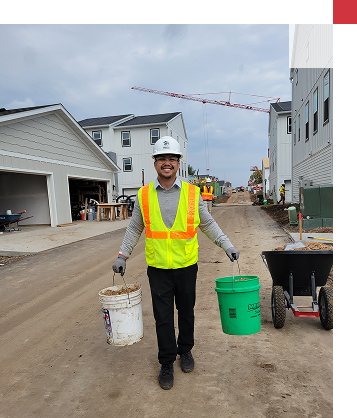
In fall 2025, team members volunteered their time with Great River Greening, a Minnesota-based organization dedicated to land restoration and habitat revitalization, and Twin Cities Habitat for Humanity.
Volunteers helped plant a variety of climate resilient trees at The Heights Community Energy.
This unique, 112-acre mixed-used redevelopment project on Saint Paul’s East Side will be heated and cooled by one of the largest networked geothermal energy systems in the state. Designed as a model for sustainable urban development, The Heights will combine efficient building design, district geothermal energy, and community-centered outdoor spaces for residents. The trees planted by volunteers will contribute to the neighborhood’s robust tree canopy that supports cleaner air and stronger wildlife habitats.
As the energy partner for The Heights redevelopment, District Energy is proud to be involved and contribute not only through our energy system expertise, but also through hands-on volunteerism that supports long-term community vitality, stewardship, and continued investment in the city of Saint Paul.


Annual Report 2025
Financials
REVENUES & EXPENSES
HEATING SERVICES
| YEAR-END 9/30 | FY2025 | FY2024 |
|---|---|---|
| Demand rate ($/kW/mo) | $6.44 | $6.28 |
| Energy charge ($$/MWh) | $28.73 | $26.70 |
| Overall rate ($/MMBtu, 1700 Util hrs) | $21.74 | $20.81 |
| Demand (kW) | 188,873 | 185,358 |
| Energy sales (MWh) | 329,859 | 292,731 |
COOLING SERVICES
| YEAR-END 9/30 | FY2025 | FY2024 |
|---|---|---|
| Demand rate ($/ton/mo) | $34.19 | $33.36 |
| Energy charge ($/ton-hour) | $0.093 | $0.102 |
| Overall rate ($/ton-hour, 1200 Util hrs) | $0.435 | $0.435 |
| Demand (tons) | 25,619 | 26,045 |
| Energy sales (ton-hours) | 36,946,462 | 36,110,382 |
RATES & UNIT SALES
OPERATING REVENUES
| YEAR-END 9/30 | FY2025 | FY2024 |
|---|---|---|
| Operating Revenues | $39,717,813 | $36,727,682 |
OPERATING EXPENSES
| YEAR-END 9/30 | FY2025 | FY2024 |
|---|---|---|
| Fuel and energy | $13,661,193 | $11,132,005 |
| Non-fuel operating expenses | $16,035,357 | $15,277,476 |
| Total operating expenses | $29,696,550 | $26,409,481 |
| Operating Income Before Depreciation | $10,021,263 | $10,318,201 |
Board of Directors
Heidi Conrad, Chairperson
Chief Financial Officer, University of Wisconsin-Madison’s School of Medicine & Public Health
Michelle Beeman
Former Environmental Public Executive, Environmental Protection & Regulation
Heide Kempf-Schwarze
Senior Property Manager, Unilev Management Corporation
Eric Krause
Director of Regional Facilities Hospital Operations, Alliance Health
Large-sized customer representative
Kelly Lange
Enterprise Procurement Director,
Securian Financial
Medium-sized customer representative
Pat Wolf
President, Commercial Real Estate Services
Small-sized customer representative
Tony Poole
Business Manager, Steamfitters Pipefitters
Local 455
Beverly Jones Heydinger
Retired Chair, Minnesota Public Utilities Commission
Luke Gaalswyk, Ex Officio
President & CEO, District Energy St. Paul