Hydronic heating and cooling systems like District Energy St. Paul rely on the circulation of water to transfer energy throughout a building. For these systems to operate efficiently, the piping network needs to remain fully pressurized and completely filled with water.
One of the more common operational challenges in these systems is the presence of air, which can affect performance. Even small amounts of air in the system can reduce efficiency, create uneven heating or cooling, and lead to additional maintenance if not addressed early.
District Energy Building Connections
Buildings connected to district energy systems typically operate in one of two ways, either directly connected or indirectly connected via a heat exchanger.
Directly Connected Systems
In a directly connected system, the building’s piping is connected directly to the district system. The same water circulating through the district system also flows through portions of the building.
In these systems:
• The district system provides the hot or chilled water
• Building piping and coils are connected to the district network
• System pressure and water quality are largely influenced by the district system
Many of these buildings use internal pumps to circulate water through air handling units, fan coils, and other equipment. These systems are part of a larger network, meaning issues like air or pressure imbalances can impact both the building and the district system overall.
Indirectly Connected Systems
In an indirectly connected system, a heat exchanger separates the district system from the building loop.
In these systems:
• The district system transfers energy through a heat exchanger
• The building maintains its own closed loop system
• Building pumps, pressure, and water quality are managed internally
Given that the building loop is isolated, air issues generally remain contained within the building system; however, they can still result in performance problems if not managed properly.
Common Causes of Air in the System
Air can enter hydronic systems in a number of ways, especially during seasonal transitions or maintenance.
Some of the more common causes include:
• Initial system filling or seasonal startup
• Low system pressure conditions
• Maintenance activities where piping is opened
• Dissolved gases coming out of the water
• Small leaks in piping or system components
These conditions are fairly common, but if not addressed, can lead to larger operational issues over time.
Effects on System Performance
Air in the system can impact performance in several ways. Reduced heat transfer can occur when air collects in coils or piping, limiting how effectively water can move energy. Air pockets may also restrict flow, which can result in uneven cooling or heating across different areas of the building.
In some cases, air entering pumps can cause cavitation, which may lead to noise, vibration, and long-term wear on equipment. Air can also introduce oxygen into the system, increasing the potential for corrosion in piping and components.
Unusual noises, such as gurgling or rushing sounds, are often an early sign that air is present in the system.
Air Removal and System Management 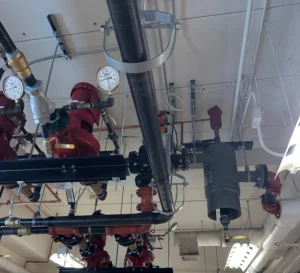
Managing air in the system is an important part of maintaining stable operation.
Common methods include:
• Manual air vents to release trapped air during startup
• Automatic air vents that remove small amounts of air over time
• Air separators that capture and discharge air from circulating water
• System purging during filling to push air out of the piping
Importance of System Pressure
Maintaining proper system pressure is one of the most important factors in preventing air from entering the system.
 Correct pressure helps ensure:
• The system stays fully filled with water
• Air is not drawn in through seals or connections
• Pressure is maintained at higher elevations in the building
• Pumps operate under stable conditions
If pressure drops too low, air can be pulled into the system, especially at higher points in the building. On the other hand, excessive pressure can put stress on system components.
For directly connected systems, pressure is largely maintained by the district system, but building level issues can still require attention. With indirectly connected systems, maintaining proper pressure is the responsibility of the building system and operators.
The Solution: Maintenance and Monitoring
Air is a common, but often overlooked issue in hydronic heating and cooling systems. Whether a building is directly connected or uses a heat exchanger, managing air within the system is important for maintaining reliable operation.
By monitoring system pressure, removing air during startup, and addressing issues early, building operators can reduce performance impacts and avoid larger problems later in the season. Regular maintenance and monitoring can help sustain the dependable, efficient performance of these essential systems. If you or your team has questions about this process or anything related to your district energy connection, please contact our team at 651-297-8955, info@districtenergy.com, or through our online support request form.